 Cosmic Insights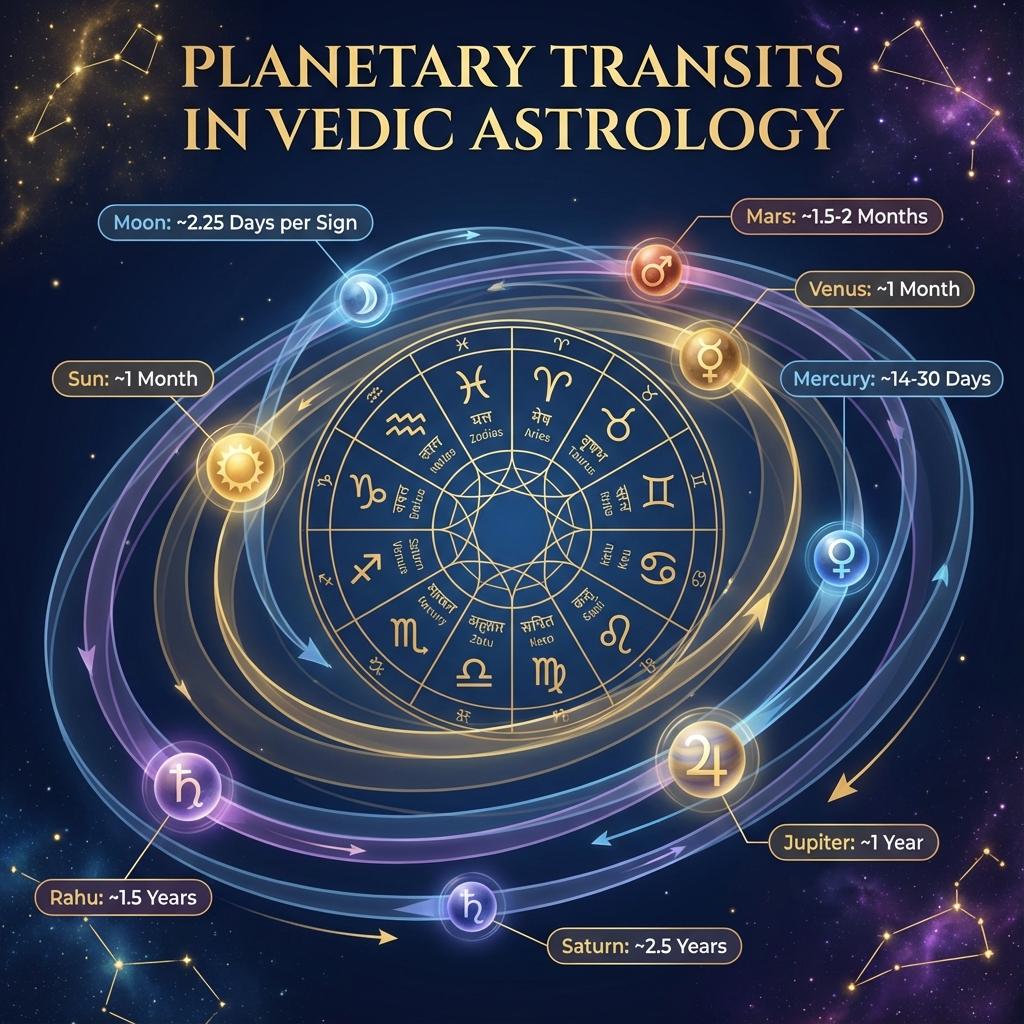
Planetary Transits in Vedic Astrology: Understanding Cosmic Movements
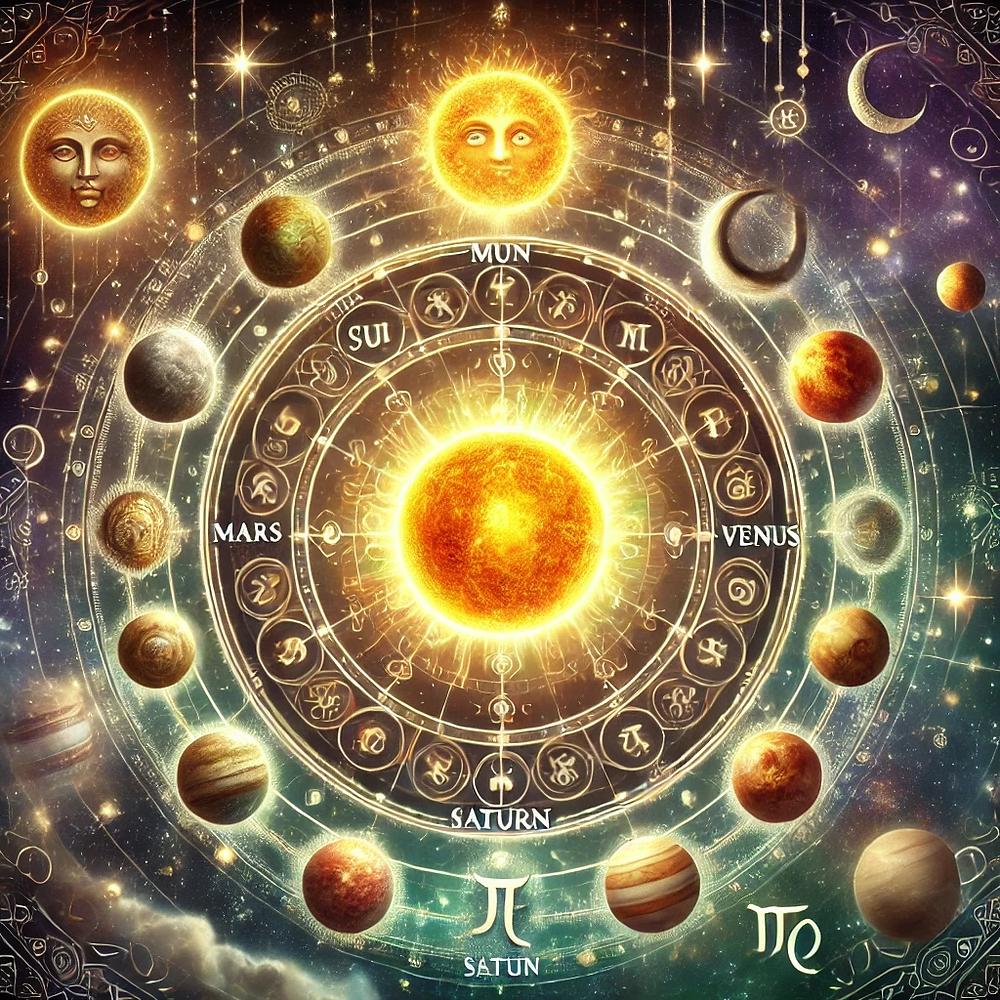
Planetary transits refer to the movement of planets through the zodiac. In Vedic astrology, these movements are traditionally studied to understand how the current positions of celestial bodies relate to an individual's birth chart.
Every planet moves at a different speed. The Moon travels relatively quickly through the zodiac, while Jupiter and Saturn take much longer. Because of these differences, each planet has a different role in traditional transit analysis.
Transit analysis is generally used together with other astrological techniques rather than as a standalone method. Astrologers may compare current planetary positions with the ascendant, Moon sign, houses and planetary placements in the birth chart.
What is a Planetary Transit?
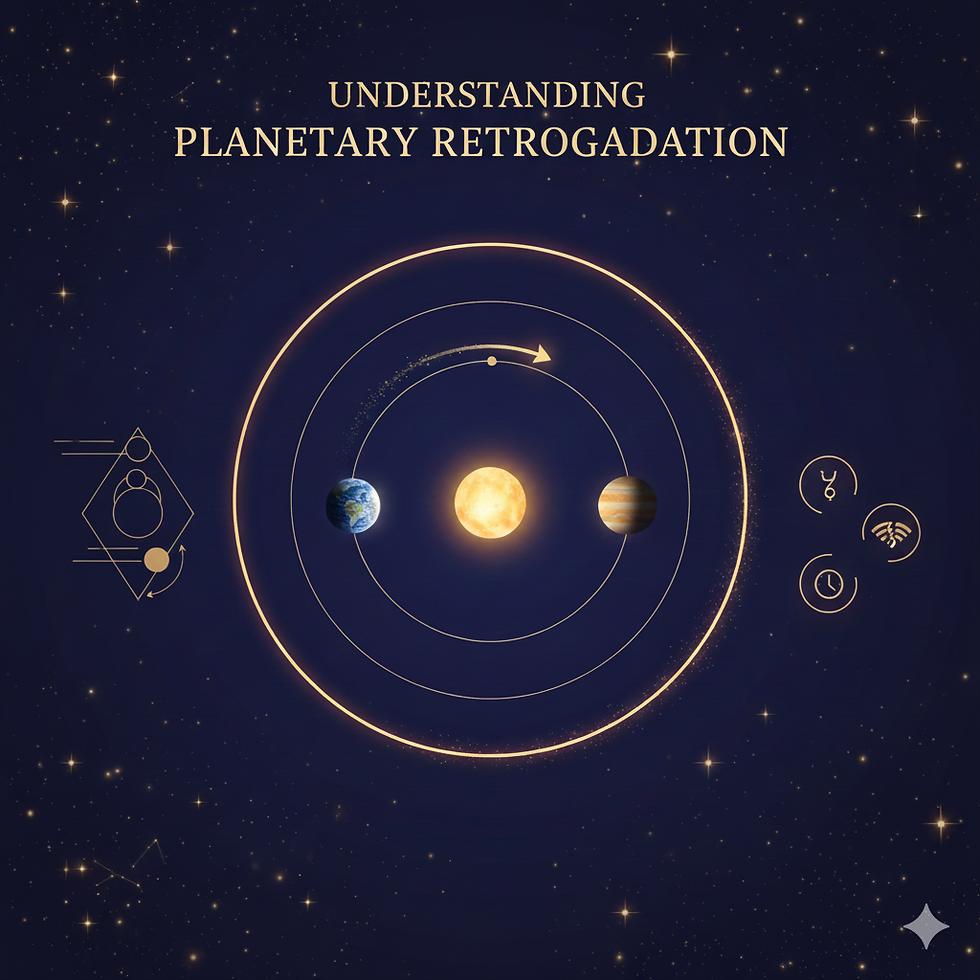
A planetary transit describes the current position and movement of a planet through the zodiac. As planets continue their orbits, their positions relative to Earth and the zodiac signs constantly change.
In traditional astrology, astrologers observe these movements and compare them with the planetary positions recorded at the time of birth.
For example, when Jupiter moves from one zodiac sign to another, an astrologer may examine the house Jupiter occupies in relation to the individual's birth chart.
Why Are Planetary Transits Important?
Transits are traditionally used as one of the timing techniques in Vedic astrology. They are used to study changing planetary patterns and their symbolic relationship with different areas of a birth chart.
A transit is not normally interpreted independently. Astrologers may consider planetary periods such as Dashas along with transits to create a broader traditional interpretation.
Jupiter Transit
Jupiter is traditionally associated with wisdom, education, knowledge, growth, guidance and expansion.
Jupiter moves relatively slowly through the zodiac and traditionally spends approximately a year in a sign, although its actual movement can vary because of retrograde motion.
Traditional transit analysis may examine Jupiter's house placement, aspects and relationship with natal planets when interpreting its symbolic influence.
Saturn Transit
Saturn is traditionally associated with discipline, responsibility, patience, structure and long-term development.
Saturn moves much more slowly than the inner planets and therefore remains in a zodiac sign for a considerably longer period. Its transits are often given particular attention in traditional Vedic astrology.
Astrologers may examine Saturn's movement in relation to the Moon sign, ascendant and other planetary placements. The traditional interpretation often emphasizes patience, responsibility and long-term effort.
Rahu and Ketu Transits
Rahu and Ketu are lunar nodes rather than physical planets, but they have an important place in traditional Vedic astrology.
Their movements through the zodiac are traditionally studied in relation to houses, signs and other planetary positions. Astrologers may associate their transits symbolically with changes, desires, detachment and transformation.
Fast-Moving Planets
The Sun, Moon, Mercury, Venus and Mars generally move more quickly through the zodiac compared with Jupiter and Saturn.
Because they move faster, their transits are often used for shorter-term traditional interpretations. The Moon is particularly fast and generally changes zodiac signs every two to three days.
Transit and Birth Chart
A planetary transit is traditionally considered more meaningful when studied in relation to the individual's birth chart.
The same planetary transit may therefore be interpreted differently for different people. Their ascendant, Moon sign, houses and natal planetary positions may all be different.
This is why general transit predictions should not be treated as complete birth-chart readings.
Transit vs Birth Chart
- Birth Chart: Represents planetary positions at the time and place of birth.
- Transit: Represents the current movement of planets through the zodiac.
- Transit Analysis: Traditionally compares current planetary positions with the birth chart.
- Purpose: Used traditionally to study changing planetary patterns and timing.
How Long Do Planetary Transits Last?
The duration of a transit depends on the planet involved. The Moon moves rapidly through the zodiac and therefore produces short-lasting transits. The Sun generally spends about a month in each zodiac sign.
Jupiter and Saturn move much more slowly and therefore their transits can remain significant for much longer periods. Retrograde motion can also cause a planet to pass over similar degrees more than once.
Frequently Asked Questions
What is a planetary transit?
A planetary transit refers to the current movement of a planet through the zodiac and its traditional relationship with a birth chart.
Which planets are important in transit analysis?
All major planetary movements can be considered. Jupiter, Saturn, Rahu and Ketu often receive particular attention because of their slower movements.
How long does a planetary transit last?
The duration varies according to the planet. The Moon moves quickly, while Jupiter and Saturn remain in a zodiac sign for much longer periods.
Can transits be studied without a birth chart?
General transit information can be discussed without a birth chart, but detailed traditional interpretation normally considers the individual's complete birth chart.
Are planetary transits scientifically proven to predict events?
No. Planetary transit interpretations belong to traditional astrology and should not be considered scientifically proven predictions.
Conclusion
Planetary transits provide a traditional way of studying the ongoing movement of celestial bodies through the zodiac. By comparing current planetary positions with a birth chart, astrologers interpret different periods and themes according to the principles of Vedic astrology.
Understanding planetary transits can help readers explore how astrology connects the movement of planets with traditional concepts of timing, change and personal experience.
For a detailed interpretation, transits are traditionally studied together with the birth chart, planetary periods and other relevant astrological factors rather than relying on a single transit alone.
Disclaimer: Planetary transit interpretations are based on traditional astrological beliefs and are not scientifically proven methods for predicting future events or outcomes.