 Cosmic Insights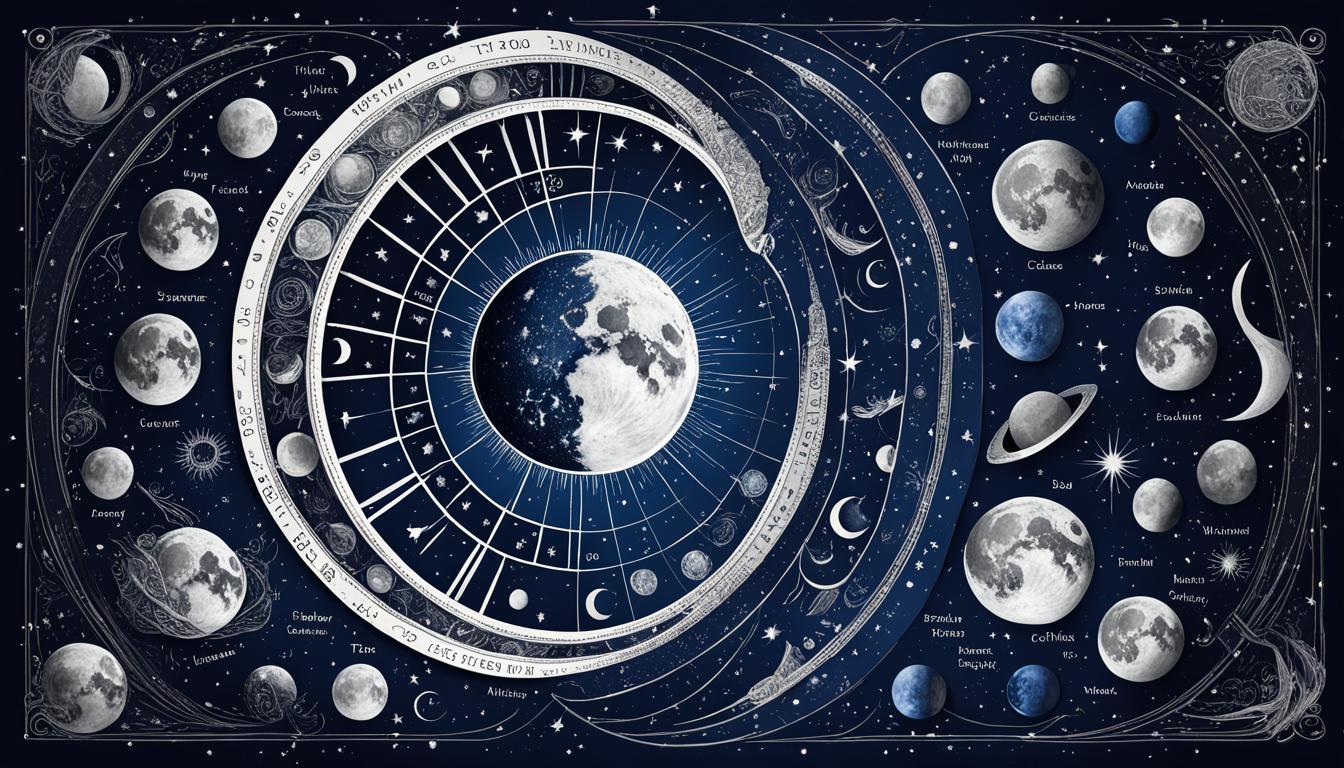
Moon Phases in Astrology: Understanding the Lunar Cycle and Its Significance
The Moon is one of the most recognizable objects in the night sky. As the Moon travels around Earth, the amount of its illuminated surface visible from Earth changes, creating the different phases of the lunar cycle.
The complete cycle takes approximately 29.5 days and moves through several recognizable stages, including the New Moon, Crescent Moon, First Quarter, Gibbous Moon, Full Moon and the waning phases.
In astrology, the Moon has traditionally been associated with emotions, mental patterns, habits, sensitivity and inner experiences. Because of this association, different Moon phases have also been given symbolic importance in traditional astrology and spiritual practices.
What Are Moon Phases?
Moon phases describe the changing appearance of the illuminated portion of the Moon when viewed from Earth. The phases occur because the Moon orbits Earth while sunlight illuminates different portions of its surface.
The Moon itself does not produce its own light. What we see as moonlight is sunlight reflected from its surface. The changing angle between the Sun, Earth and Moon creates the appearance of different phases.
The New Moon
The New Moon occurs when the Moon is positioned between the Earth and the Sun, making the illuminated side largely face away from Earth.
In traditional astrology and spiritual practices, the New Moon is often associated with beginnings, reflection, intention-setting and starting a new cycle.
New Moon days are also important in the traditional Hindu calendar and are known as Amavasya.
The Waxing Moon
After the New Moon, the visible illuminated portion gradually increases. This period is known as the waxing phase.
Traditional interpretations often associate the waxing Moon with growth, development, building momentum and gradually bringing intentions into action.
First Quarter Moon
During the First Quarter phase, approximately half of the Moon appears illuminated from Earth. It occurs during the waxing portion of the lunar cycle.
Symbolically, this phase is sometimes associated with action, decision-making and moving forward with plans.
The Full Moon
A Full Moon occurs when the Moon appears fully illuminated from Earth. It represents the midpoint of the lunar cycle and is one of the most visually prominent Moon phases.
In traditional astrology and spiritual practices, the Full Moon is often associated with completion, awareness, reflection and emotional intensity.
In the traditional Hindu calendar, the Full Moon day is known as Purnima and several important festivals and observances occur on Purnima Tithi.
The Waning Moon
After the Full Moon, the illuminated portion gradually decreases. This is called the waning phase.
Traditional interpretations may associate the waning phase with release, reflection, completion and letting go of things that are no longer useful.
Moon Phases and Vedic Astrology
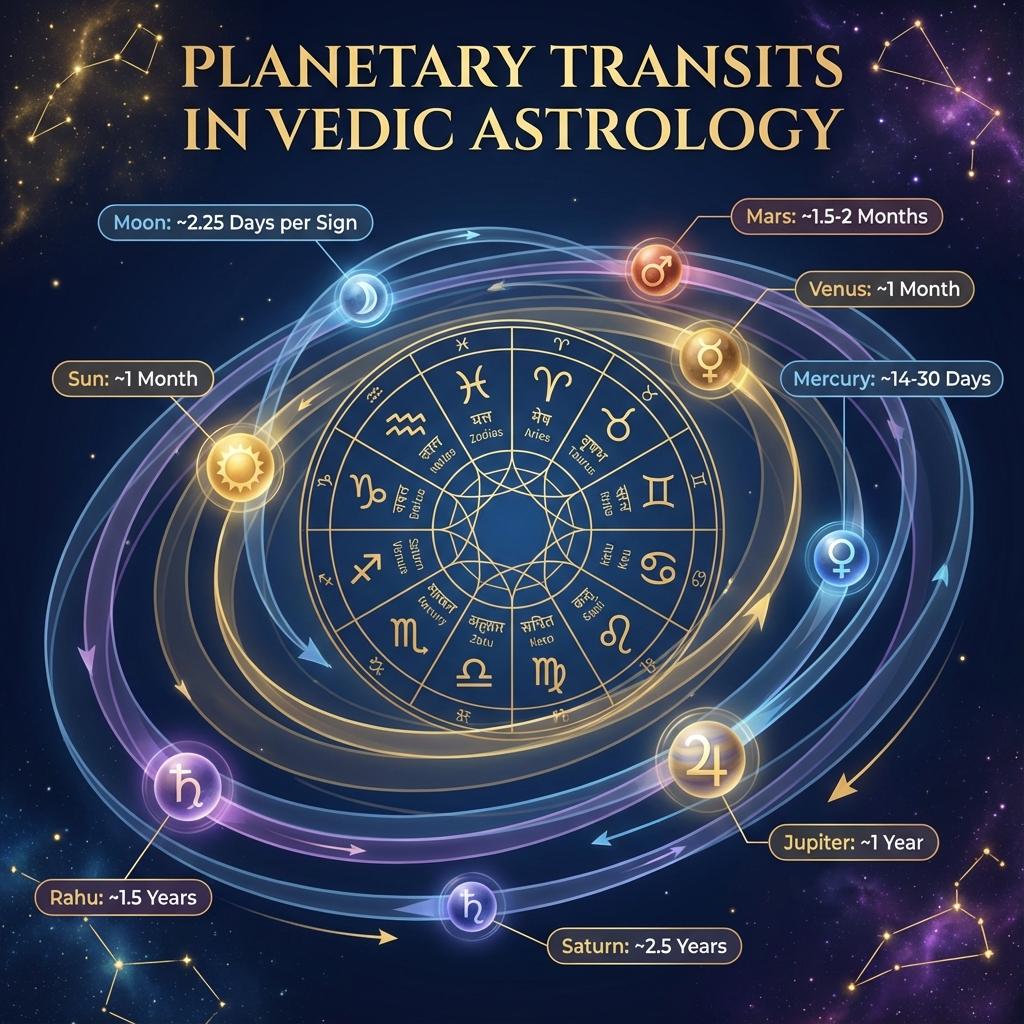
The Moon has an important place in Vedic astrology. Its position at the time of birth is traditionally used to determine the Janma Rashi and Janma Nakshatra.
The traditional Panchang also uses the relative positions of the Sun and Moon to calculate Tithi. Tithi is one of the five important elements of the Panchang, along with Vara, Nakshatra, Yoga and Karana.
Moon Phases and Spiritual Practices
Many spiritual traditions use lunar cycles as symbolic markers for reflection and practice. New Moon periods may be used for introspection, while Full Moon periods may be associated with prayer, meditation and completion.
These practices vary significantly between cultures, communities and individuals. They should be understood as traditional or spiritual practices rather than scientifically established methods for predicting human behaviour.
Frequently Asked Questions
How long is a complete lunar cycle?
A complete lunar phase cycle takes approximately 29.5 days.
What is Amavasya?
Amavasya is the traditional Hindu term for the New Moon day.
What is Purnima?
Purnima refers to the Full Moon day in the traditional Hindu calendar.
Why is the Moon important in Vedic astrology?
The Moon is traditionally associated with the mind and emotions and is also important in determining the Janma Rashi and Janma Nakshatra.
Conclusion
The changing phases of the Moon are a natural astronomical cycle that has also gained symbolic importance in astrology and spiritual traditions. From the New Moon to the Full Moon and the waning phase, each stage has its own traditional associations.
Understanding Moon phases can help readers learn more about the lunar calendar, Tithi and the traditional role of the Moon in Vedic astrology.
Disclaimer: Astrological and spiritual interpretations of Moon phases are traditional practices and are not scientifically proven methods of predicting emotions, behaviour or life events.